
Executive View | African Banking Strategy
Systems of the Future in Africa
Why the next winning bank on the continent will be built on real-time rails, modular cores, intelligent risk engines, and ecosystem-grade interoperability.
For senior management bankersApril 2026Editorial feature
Africa is not waiting for the future of banking. It is already designing it. Mobile money has reached global scale on the continent, cross-border payment rails are being rebuilt for African trade, and digital identity, payments, and data-sharing infrastructure are reshaping how financial services are delivered. For bank boards and executive committees, the implication is clear: the future bank in Africa will not be defined by branch count alone. It will be defined by architecture.
2.1bn Mobile money registered accounts globally in 2024, with Sub-Saharan Africa remaining the industry’s epicentre.
$127bn Bank-to-mobile transfers in 2024, showing how quickly interoperable rails are becoming mainstream.
Instant Cross-border local-currency settlement is no longer a theory. It is already being operationalised through PAPSS.
1. Africa’s next core will be platform-led, not product-led
The traditional banking model was built around products managed in silos: deposits in one system, loans in another, payments somewhere else, reporting patched together at month end. That operating model is becoming too slow for the continent’s next phase.
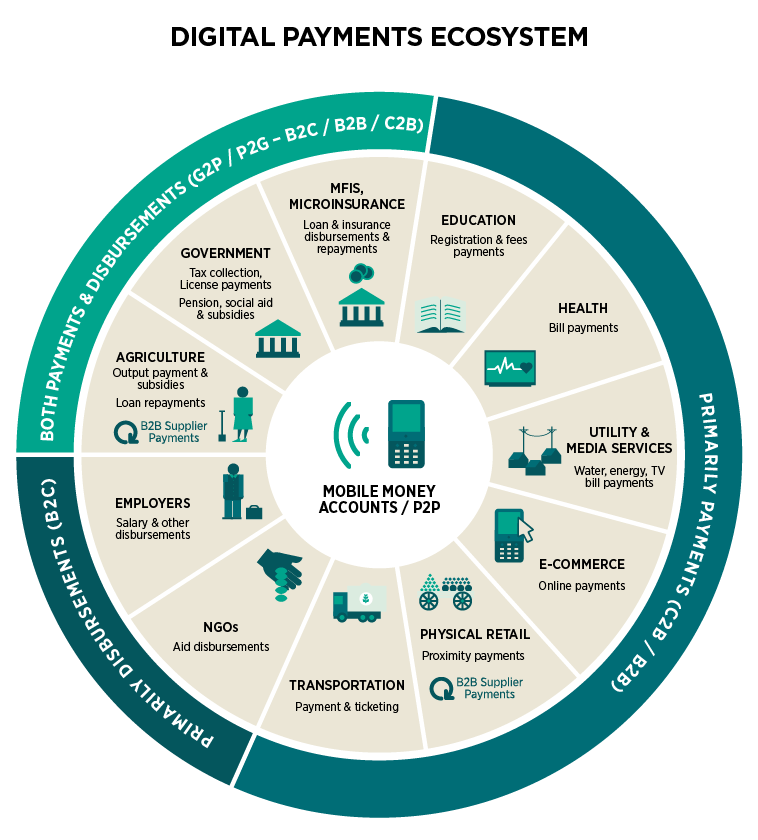
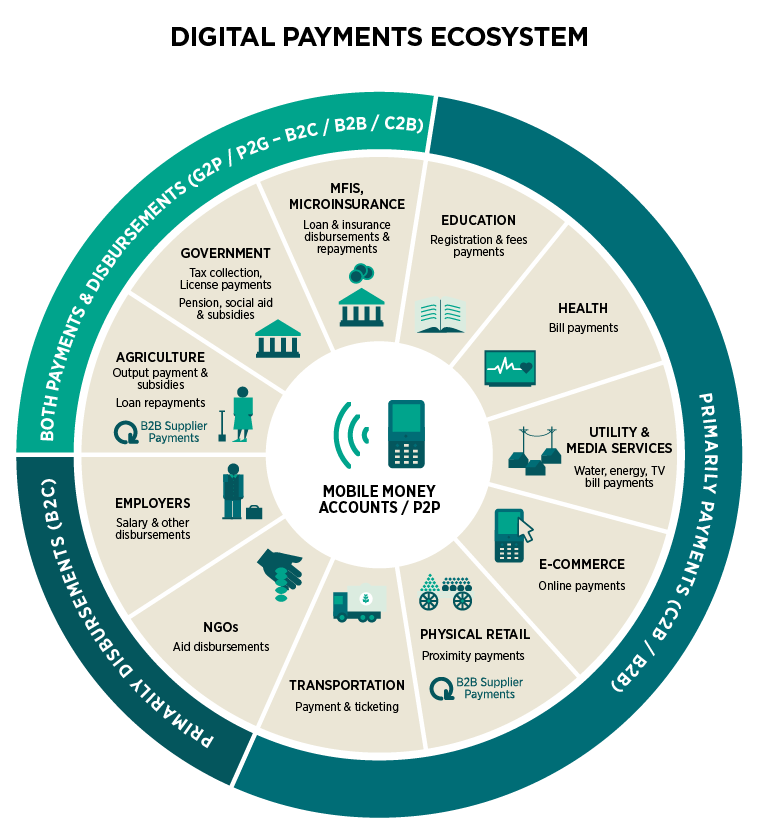
The banking systems of the future in Africa will be platform-led. That means one operating backbone for customer data, ledgering, payments, lending, channels, risk, compliance, and analytics. It means banks can serve retail customers, SMEs, agricultural value chains, merchants, and ecosystem partners from a connected architecture instead of a fragmented stack.
In practical terms, the future core is not just a back-office engine. It is a growth platform that supports bank-to-wallet, wallet-to-bank, merchant collections, embedded finance, agency banking, and digital onboarding without turning every new initiative into a major systems project.
“The winners in African banking will not simply digitize products. They will orchestrate ecosystems.”
2. Real-time is becoming the baseline, not the premium tier
The next generation of African banking systems will be designed around real-time expectations. Customers increasingly expect money movement, notifications, balance updates, and service decisions to happen instantly, not overnight.
GSMA’s 2025 industry report shows that mobile money reached more than 2.1 billion registered accounts and 514 million monthly active accounts in 2024, with Sub-Saharan Africa still at the centre of that scale. The same report shows bank-to-mobile transfers reached $127 billion and mobile-to-bank transfers reached $125 billion in 2024. Those numbers matter because they tell banks something strategic: the market is moving toward always-on interoperability, not occasional channel integration.
Banks whose core systems still rely on heavy batching, manual reconciliations, or delayed decisioning will increasingly feel misaligned with customer behavior. In the future, speed will not merely improve experience. It will determine relevance.
3. Interoperability will separate leaders from laggards
One of the most important shifts underway is not just digitization, but interoperability at scale. PAPSS, the Pan-African Payment and Settlement System, is explicitly designed to support instant and secure cross-border payments in local currencies across Africa. Its stated benefits include reducing foreign-exchange complexity, easing liquidity pressure, improving working capital, and opening access to new African markets.
For senior bankers, that changes the technology brief. The future bank is not merely connected to a national switch or a mobile money provider. It is capable of operating across multiple rails, settlement models, counterparties, and regulatory contexts with confidence.
In other words, the architecture question is no longer “Can our core process transactions?” It is “Can our institution plug into the African payments future without replatforming every time the market evolves?”

4. Identity, trust, and compliance will be built into the stack
The future of banking in Africa will not be secured by speed alone. It will be secured by trust infrastructure. World Bank programmes across the continent are increasingly centered on digital public infrastructure, especially digital identity, payments, and trusted data exchange. In Ethiopia, for example, the World Bank-backed digital ID project aims to give at least 90 million people access to an inclusive and secure ID while also investing in digital payments and data exchange infrastructure.
At the same time, the GSMA reports that fraud remains an active industry issue and that providers and regulators are investing more in digital financial literacy and risk reduction. For banks, the lesson is straightforward: future-ready systems must combine onboarding speed with strong KYC, AML, fraud monitoring, consent management, auditability, and cyber resilience by design.
Compliance can no longer sit at the end of the process. In the future bank, it sits inside the operating model itself.
5. The smartest banks will modernize in modules, not in slogans
The future core in Africa will almost certainly be modular, API-first, and cloud-ready. Not because it sounds modern, but because it gives management teams the ability to change faster without destabilizing the institution.
This does not mean every bank needs a dramatic overnight transformation. It means boards should favor architectures that let the institution modernize in layers: a real-time ledger, a digital onboarding layer, a product factory, an API gateway, a collections engine, a reporting and analytics layer, and an identity and consent layer. Modernization becomes manageable when it becomes composable.
In the African context, that flexibility is not a luxury. It is essential for dealing with different customer segments, patchy infrastructure, multi-rail payment environments, and fast-changing regulatory expectations.
What boards should be asking now
- Can our core support real-time posting and multi-rail payments?
- Can we onboard customers securely with digital identity and low-friction KYC?
- Are we API-ready for mobile money, fintechs, merchants, and regional payment rails?
- Can we launch and price new products in weeks rather than quarters?
- Do we have fraud controls, observability, and regulatory reporting built into the system design?
Africa will not inherit the banking systems of the future. It will build them, and the institutions that act early will shape the rules of the market.
6. The next competitive advantage is institutional agility
The deepest shift is strategic, not technical. In the next era, the most valuable banking institutions in Africa will not simply have large balance sheets. They will have agility: the ability to integrate faster, price smarter, launch earlier, control risk better, and respond to market openings before competitors do.
That is why the systems conversation belongs in the boardroom. Core banking is no longer just an IT procurement topic. It is a market-positioning decision. It determines whether a bank can grow into cross-border commerce, partner-led distribution, SME ecosystems, digital agriculture, embedded finance, and public-service payment flows.
The question for Africa’s banking leaders is no longer whether modernization is necessary. The question is whether current systems are capable of competing in a continent that is becoming more digital, more connected, and more interoperable every year.
The executive takeaway
The banking systems of the future in Africa will be real-time, interoperable, intelligence-driven, identity-aware, compliance-by-design, and modular enough to evolve continuously. Institutions that understand that shift early will not just serve the future market better. They will help define it.
Source notes
- GSMA, The State of the Industry Report on Mobile Money 2025
- Pan-African Payment and Settlement System (PAPSS)
- World Bank, Ethiopia Digital ID for Inclusion and Services Project
- World Bank, Mobilizing Access to the Digital Economy Alliance: Africa
- Image attribution: Johannesburg skyline by User:(WT-shared) NJR ZA at wts wikivoyage, Wikimedia Commons, CC BY-SA.
- Image attribution: Mobile money ecosystem Africa by Le gracié, Wikimedia Commons, CC BY-SA 4.0.
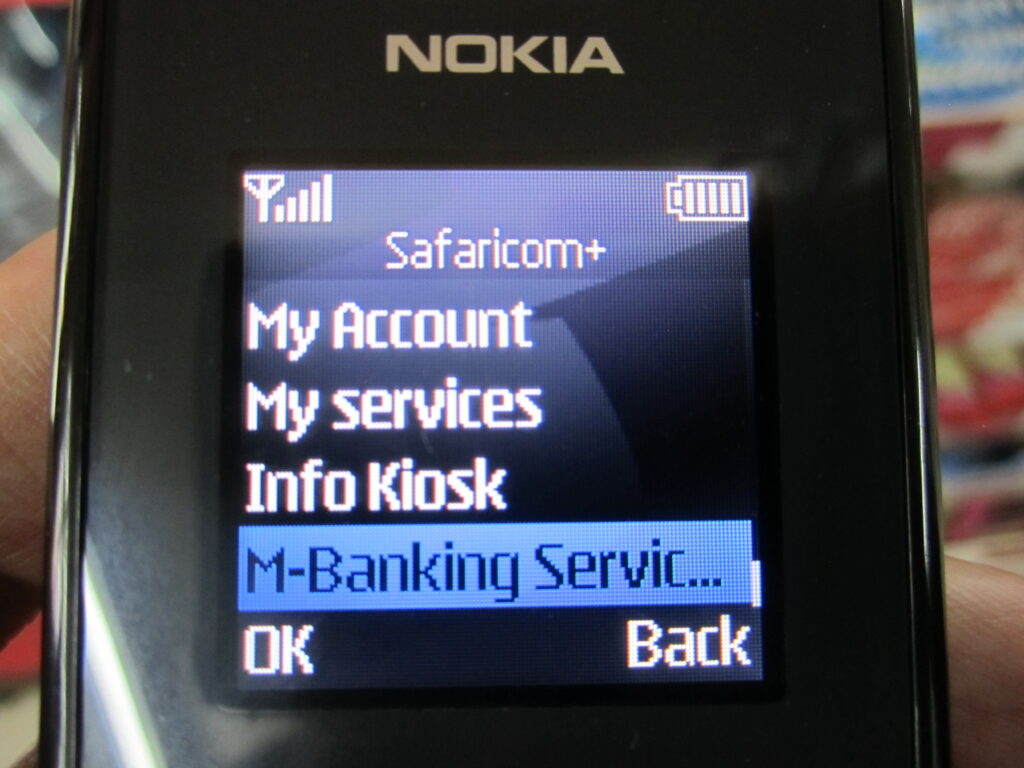
- Image attribution: M-Pesa service screen on a feature phone by Ivan Small, Wikimedia Commons, CC BY-SA 2.0.
Prepared as a leadership-oriented blog feature for senior management bankers. Copy is written for executive positioning rather than academic publication.
Leave a Comment